
The ongoing oil price decline is mainly a result of oversupply in the global market


'The road ahead for the government's fiscal management will be full of many new challenges,' warns A K Bhattacharya.
The new Budget would do well to fill up the gaps and pave a strong way forward to ensure that the optimism surrounding it is not short-lived.

The government is scrambling to contain the fiscal deficit at 4.1 per cent of GDP in the fiscal year ending March
.jpg)
The government on Tuesday raised excise duty on petrol by Rs 2.25 per litre and by Re 1 a litre on diesel but retail pump rates will not be increased as oil firms decided to absorb the duty change for the time being.

India's trade deficit shrank to a 10-month low in December as global oil prices tumbled and demand for gold fell, auguring well for Indian current account balance and the rupee.

Capital expenditure (capex) by 54 large central public sector enterprises (CPSEs) and five departmental arms with an annual capex target of Rs 100 crore and above has reached around 42.5 per cent of their annual target of about Rs 7.33 trillion in this financial year so far, a senior official from the Ministry of Finance told Business Standard. "The Centre is pushing the big public undertakings in the infrastructure and refinery sector to achieve 90 per cent of their target by the end of the third quarter," he said. The capex by this group of CPSEs stands at around Rs 3.1 trillion in the April-August period so far.

Jaitley's fifth Budget has provided little relief to the middle class.

The Budget may see new rural schemes and stepping up of funding towards existing programmes like MNREGA, rural housing, irrigation projects and crop insurance.

Thus far in 2017-18, FIIs and MFs have invested Rs 198.91 billion and Rs 1,119.49 billion in the Indian equity markets. Of this, around Rs 152.46 billion has come in January alone.
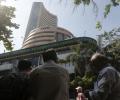
Top gainers in the Sensex pack included Bharti Airtel, Tata Motors, IndusInd Bank, Kotak Bank, Hero MotoCorp, Asian Paints and PowerGrid, which rose up to 2.53 per cent.

The world seems to have caught severe pneumonia, or worse, as China had flu.

Capital expenditure by 54 large central public sector enterprises and five departmental arms, having a capex minimum target of Rs 100 crore, rose 93 per cent year-on-year (YoY) in the April-May period to Rs 1.39 trillion. The National Highways Authority of India (NHAI) and the Railways have started this financial year's capex cycle on a stronger note. In the first two months of FY24, the 54 CPSEs, along with the departmental arms, achieved 19 per cent of their combined budget target of Rs 7.33 trillion, Business Standard has learnt.

What is required from government is intellectual framework.

'You may see some movement indicating a simpler tax regime with less exemptions but with fewer tax rates making life simpler for taxpayers.'

Private investment will respond only to sustainable reform.

Institutions will wait till there is more clarity on Budget.

Softening the demonetisation blow, the Budget for 2017-18 on Wednesday halved the tax to 5 per cent on incomes up to Rs 500,000 but proposed a new surcharge of 10 per cent on incomes between Rs 50 lakh and Rs 1 crore and raised duties on cigarettes and pan masala while stepping up allocations for infrastructure, rural, agriculture and social sectors.

Jaitley promised higher investment in roads and railways.

FM should avoid proposals such as to tax financial transactions and fringe benefits

It is possible that the final Budget architecture may be at variance with the comments.

Budget has laid emphasis on enhancing expenditure in farm & rural, and social sector including healthcare, education, skill development, job creation and infrastructure

The Bharatiya Janata Party on Saturday released its manifesto for the November 17 Madhya Pradesh elections promising MSP for wheat at Rs 2,700 per quintal and paddy at Rs 3,100 and houses for beneficiaries of the state's flagship scheme 'Ladli Bahna'.

At the Interbank Foreign Exchange market, the domestic currency resumed stable at its overnight close of 60.07 a dollar and immediately touched a low of 60.09.

The rupee bounced back by 10 paise to end at 68.62 on Friday.

'We hope there shall be more focus on existing projects and their completion rather than new projects.' 'Any new project announcements should be largely for decongesting the existing lines rather than new lines.'

Indian basket at 6-month low of $49.11 a bbl

The larger virtue of maintaining fiscal credibility should not be unduly diluted by quibbles on the fiscal math, says Sajjid Chinoy.

A piece of slightly negative news can cause a serious setback, warns Debashis Basu.
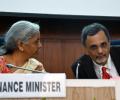
'... and without necessarily calling them Economic Surveys.' 'One should stick to the main focus, which is to give people a good perspective on how the economy is doing.'

In years past, we often approached the Budget expecting to see changes in direct and indirect taxes. Those days are behind us. The Budget of today seeks to expand the economy and keep it at the forefront of technology, observes Harsh Goenka.
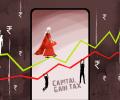
Equity benchmarks Sensex and Nifty ended on a mixed note on Wednesday as the euphoria about the Budget fizzled out, with investors going for profit-taking ahead of the Fed interest rate decision. The 30-share BSE benchmark Sensex climbed 158.18 points or 0.27 per cent to settle at 59,708.08 after it trimmed most of the intra-day gains. During the day, it had zoomed 1,223.54 points or 2 per cent to 60,773.44.

As economic policy making moves from pragmatism to populism, the bulls begin to make way for cautious optimists.

Since 2000-01, the Indian economy has shown the tendency of being unable to absorb all domestic savings as investments.

Getting the balance between fiscal restraint and growth-contracting policy remains a problem.

The accountancy giant said the rapid rise of the Indian economy with its young workforce would push it up from being the 10th largest economy in 2013 to the third largest by 2030.

'80% of the rural and urban population don't have enough purchasing power.'
The hype surrounding the Budget gives it undue importance.

Slammimg the erstwhile UPA government, Sitharaman said between 2012 and 2013, foreign investment recorded a negative 36 per cent growth.
